Tracking Vehicles with a Racing Drone Camera Angles
Stop Flying So High: The Bumper Cam
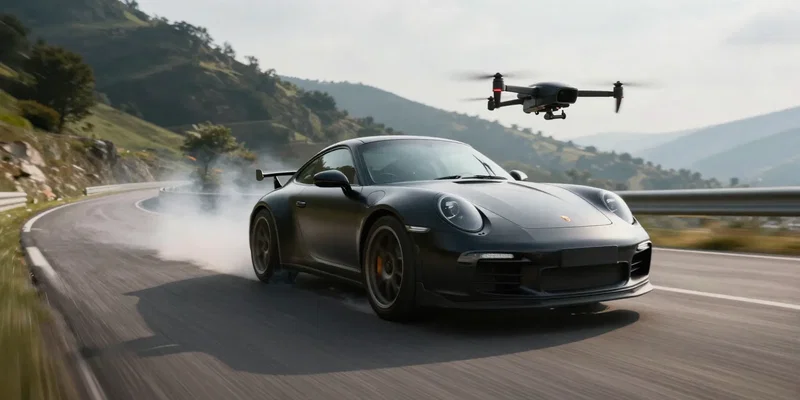
Most beginners make the same massive mistake with car chase drone shots. They fly fifty feet in the air. At that height, a car doing 80mph looks like it's crawling to the grocery store. Boring. If you want real vehicle tracking FPV, you need to get low. Ridiculously low. Drop your quad until you're practically eating the exhaust fumes. Keep your camera tilt around 20 to 25 degrees. This forces you to fly faster to keep the subject in frame, creating that visceral, ground-rushing speed blur that makes viewers actually feel the horsepower.
The Lateral Push: Parallax is Your Best Friend
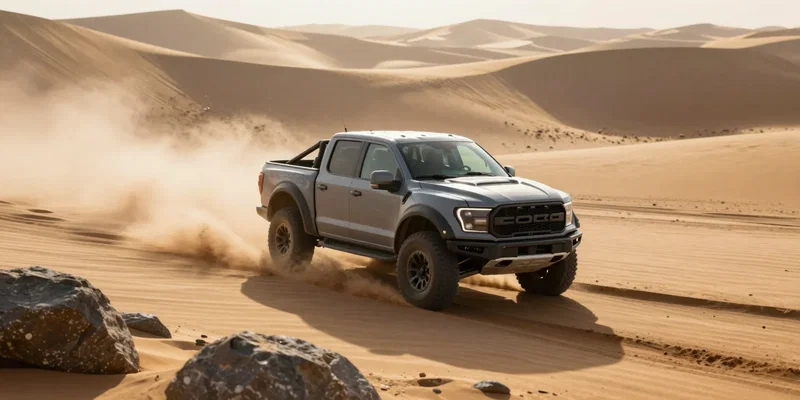
Tailing a car from behind is fine. Doing it for a whole video is lazy. Enter the lateral push. Fly parallel to the vehicle. Keep the car locked in the center of your frame while the foreground objects—trees, guardrails, bushes—whip past the lens. This is where you get those top-tier cinematic angles. The parallax effect does all the heavy lifting here. It tricks the brain into perceiving massive speed and scale. Just watch your clearance. Staring sideways while flying forward is exactly how you put a thousand-dollar rig into a pine tree.
The Reverse Lead: High Risk, High Reward
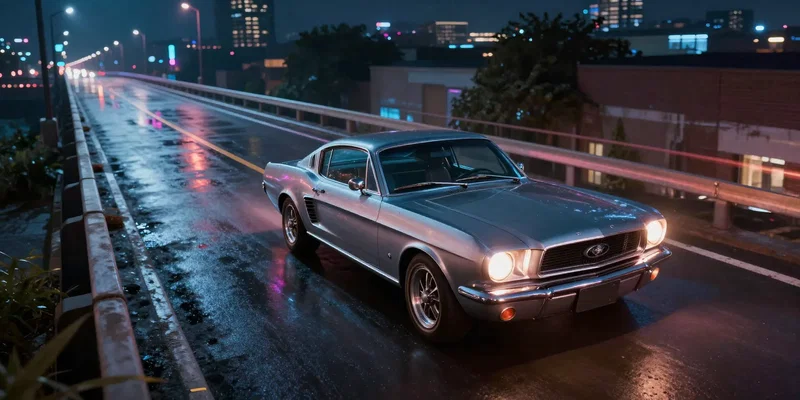
You want to stress yourself out? Try flying backward at 60mph. The reverse lead is the undisputed king of chase drone footage. You pitch the camera up, fly ahead of the car, and match its speed perfectly. It gives the audience a raw, aggressive look at the grill of the vehicle. Actually, it feels like the car is hunting the drone. You’ll need flawless communication with your driver for this. If they accelerate unexpectedly, they're wearing your quad as a hood ornament. Map your route beforehand. No surprises.
The Top-Down Zenith: The Video Game Angle
Let’s slow it down for a second. Sometimes you don't need violent speed. You just need geometry. Point your GoPro 90 degrees straight down and pace the car from above. This totally flattens the perspective. It turns the road into a moving canvas. White lines and yellow dividers slicing through the frame. It’s a very clinical, stylized way to shoot a car chase drone sequence. It works incredibly well as a transition shot between high-octane bumper runs. Just make sure the road has decent contrast, otherwise the car gets lost in a sea of gray asphalt.
The Dynamic Orbit: Wrapping the Action
Straight lines get repetitive. Eventually, you have to throw the quad around the subject. The moving orbit is exactly what it sounds like. You fly in a wide arc around the vehicle while everyone is still in motion. Start on the right rear quarter panel, sweep over the roof, and finish on the left front bumper. It takes serious stick time to keep the car centered while managing altitude and throttle. But nail it? You’ve got a shot that looks like it belongs in a massive Hollywood production. The kind of shot that makes people ask how you rigged a camera to do that.