How to Spot and Avoid Obstacles in High-Speed Flight
Speed Blindness is Real (And It Will Break Your Drone)
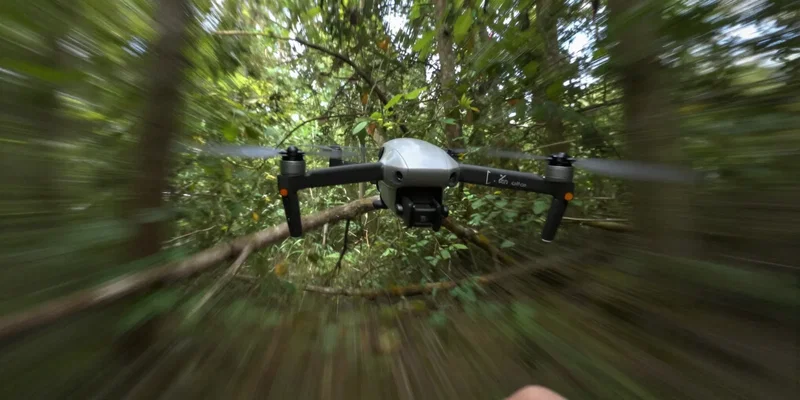
High speed FPV isn't like driving a car. It's a chaotic blur of green and gray. When you push that throttle, your brain literally drops visual frames to keep up. We call it speed blindness. You think you're flying safely. You aren't. Your racing reaction time is already half a second behind reality by the time you hit 60mph. If you wait until you actually see the obstacle in front of your lens, you're already dead. Or at least, your quad is in pieces. You need to anticipate, not just react.
Stop Staring at the Dirt
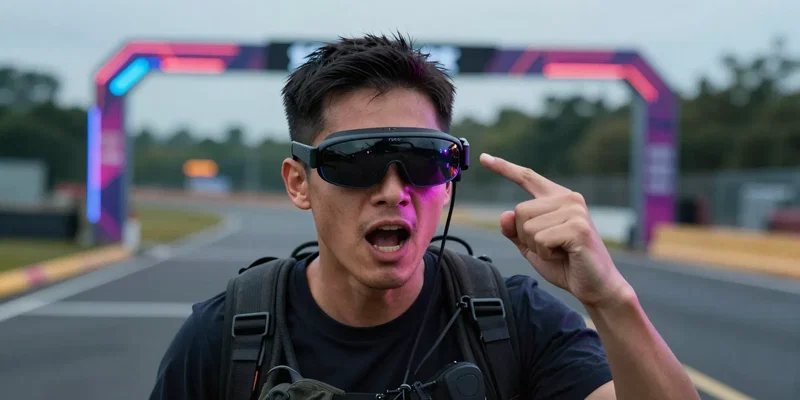
Beginners always make the same mistake. They look right at the ground directly beneath the quad. Stop doing that. Look exactly where you want to be three seconds from now. Your thumbs will naturally follow your eyes. If you stare at that massive oak tree out of fear of hitting it, guess what? You're going to smash right into it. Target fixation is a killer in drone obstacle avoidance. Pick your exit window through the branches. Lock your eyes on the empty space. Ignore the wood.
Read the Shadows, Not Just the Trees
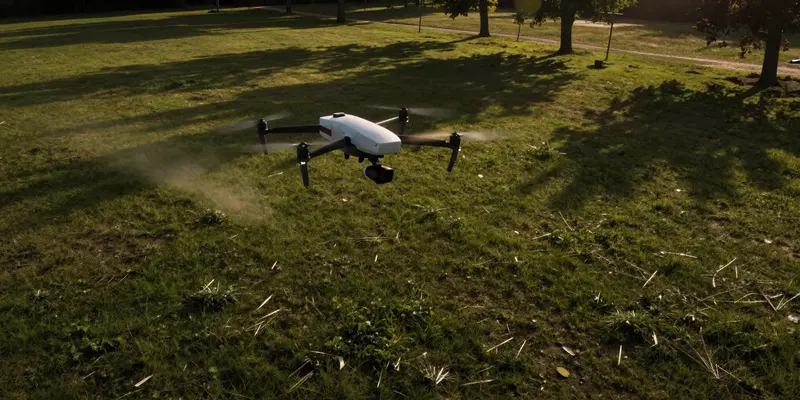
Direct sunlight plays dirty tricks on camera sensors. A thin wire or a dead branch is practically invisible against a bright sky. So how do you spot them? You don't look for the object. You look for the shadow. A thick black line on the grass points right to the hazard. It tells you exactly where the obstacle anchors to the ground. Golden hour might look beautiful on your GoPro footage. But for actual flight navigation, it's a minefield. Use those high-contrast shadows to map out the gaps before you punch through them.
Camera Tilt is Your Secret Weapon
You can't dodge what's outside your field of view. A flat camera angle is fine for hovering around your backyard. But add speed? The nose of your quad dips hard. Suddenly you're just broadcasting a live feed of the grass rushing by. Bump your camera tilt up. 30 degrees. 40 degrees. Maybe more. It forces you to fly faster just to see the horizon, sure. But it completely opens up your forward vision. You finally get the visual runway you need to process incoming hazards.
Fly the Ghost Track
The best pilots don't just dodge stuff on the fly. They pre-load a 3D map of the environment into their head. Fly a slow pack first. Map out the ghost track. Identify the hard corners, the blind spots, and that one stupidly placed light pole. When you finally speed up, you aren't flying purely on racing reaction time anymore. You're executing a script. You know the concrete pillar is there before the camera even catches the edge of it. Trust the mental map. Keep the throttle smooth.